Blepharoplasty (Eyelid Lift)
Eyes are one of the most important components of facial
beauty that is overshadowed by the process of aging and the development of
eyelid disorders.
Blepharoplasty plays an important role in restoring beauty
and skin rejuvenation.
In the past, physicians focused primarily on functional
operations and few surgeons performed cosmetic surgeries.
This trend has gradually changed over the years. Today most
plastic surgeons perform operations related to ophthalmic surgeries such as
blepharoplasty. They specialize in this field.
Blepharoplasty or eyelid lift is a type of surgery that is
used to remove excess skin and fat in the eyelids. It is mostly used to
rejuvenate or improve vision.
This surgery is mostly done for cosmetic reasons and is an
effective way to improve the eyesight of older people. Blepharoplasty surgery
improves the patient’s appearance and classifies as cosmetic surgery. It will
also greatly enhance the patient’s confidence.
CAUSES OF EYELID DROPPING
There is fat around the human’s eyes to protect them from
trauma. The presence of this fat reduces stroke. It is a natural fat and does
not increase or decrease with changing in the diet.
Like other parts of the body, the skin around the eyes loses
its elasticity with aging.
These changes are more related to genetics and age. However,
by doing some behaviors like smoking, dieting and sun exposure it can get
better or worse.
With age, the eyelids
are stretched and excess fat accumulates below the upper and lower eyelids. The
accumulation of this fat causes eyebrows dropping and forming ugly bags under
the eyes.
Who are the right candidates for this operation?
The best candidates for this surgery are those who have no
problem with their overall health and have realistic expectations. Those who
have a positive and realistic attitude to their surgery will also get better
results.
Age is ultimately not the case for this surgery, but it is
generally better for people over 35 years of age. If the eyelid drooping and
puffiness of the eyelid is hereditary, the patient may decide to have surgery
sooner.
This surgery will greatly improve the appearance of the face
and eyes. However, the patient may not achieve his/her ideal appearance. The
patient should consult with the specialist before surgery. The physician must
consider the type of genetics and lifestyle of the patient before surgery.
If you have one of the following statement, you can be a
good candidate for blepharoplasty:
• A puffy upper eyelid that makes the face look tired or sad
• Bags of fat under the skin
• Excess skin that can impair vision
The patient may also require other procedures such as
eyebrow lift, facial lift or skin rejuvenation. These surgeries take place at
the same time as they work together. These operations are performed
simultaneously.
Preoperative evaluations
The physician should discuss the patient’s goals and
expectations. He should examine the eye thoroughly and also precisely measure
the periocular area of the eye.
The patient will also
be photographed to determine the medical necessity before and after the eyelid
surgery. The patient needs to know what to expect from the procedure and to
consider all the benefits and disadvantages before surgery. You can find out if
the procedure is appropriate for you, with the help and advice of your doctor.
Consult a plastic surgeon and an ophthalmologist before
definitive planning for blepharoplasty surgery. Preoperative dry eye symptoms
should be considered, as they are directly related to postoperative complications.
Medical examinations should consider the position of the eyebrow, upper and
lower eyelids, and nose to achieve a natural result.
The specialist will examine the patient’s medical history.
He should ask about previous surgeries and past conditions or conditions such
as dry eye, glaucoma, allergies, circulatory problems, thyroid problems, and
diabetes.
The specialist physician should thoroughly study the
patient’s medical history. He will also ask about previous surgeries and past
or present conditions such as dry eye, glaucoma, allergies, circulatory
problems, thyroid problems, and diabetes. Your doctor will also ask about using
medications, vitamins, herbal supplements, alcohol, and tobacco.
Preoperative Preparation
Be sure to ask a friend or family member to be with you
during the operation and drive home after the procedure. You also need someone
to spend the night with to help you if you need anything.
If you smoke, quit smoking a few weeks before surgery.
Postoperative smoking reduces the ability of your body immune to recover.
Topical anesthesia
Upper eyelid blepharoplasty is usually performed under
topical anesthesia. The patient may be not unconscious and will be able to work
with his or her physician during the operation.
Duration of blepharoplasty
Normally this procedure takes 30 minutes, and the patient
does not feel any pain or discomfort. The operation of the lower eyelid is
similar to the upper eyelid, but due to the larger area, the operation time is
slightly longer.
If both upper and lower eyelids are done together, it
usually takes about two hours.
During surgery
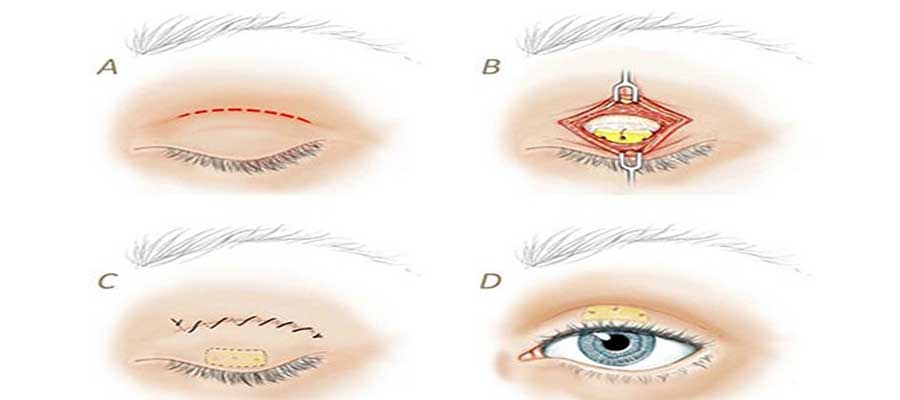
The surgeon usually cuts along the natural lines of the
eyelid. The incision lines for the eyelid surgery cut in such a way that the
resulting wound will be hidden in the natural structures of the eyelid.
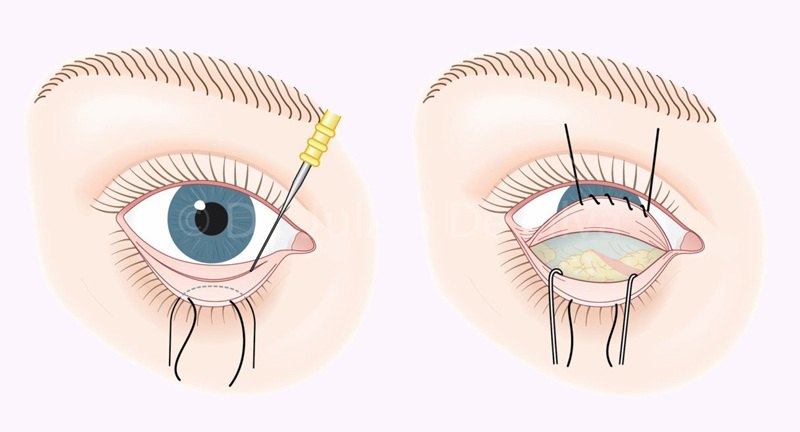
Through these incisions, the surgeon separates the skin from
the underlying tissue and removes excess fat and skin. Then the surgeon closes
the cuts with very small stitches. The sutures in the upper part should remain
for three to six days.
After surgery
Eyelid lift reduces dark circles and wrinkles under the
eyes. The patient will go home after surgery and does not need to be
hospitalized. Use ice packs on the
eyelid for the first 48 hours after surgery. Antibiotic ointment should be
applied to sutures up to 3 to 4 times daily.
The patient does not have bruising or swelling immediately
after the operation. He/she will see bruising under the eyes and swelling
around the eyelids in the first 48 hours after returning home, which is not a
concern.
After 48 hours, the bruises and swelling gradually decrease
and in 2 weeks after surgery, the swelling is eliminated.
Be prepared to stay home for a few days for complete
recovery and limit your activity. Some people will get Dry eye for up to two
weeks after surgery. If it takes more than two weeks, you should contact your
doctor.
Patients will not have significant pain during the recovery
process, and after a few days, all activities will resume.
Please check the following at home:
• Ice packs (Use medical ice packs) Be careful not to put
ice directly on the wound and be sure to place it around the suture.
• Use sterilized gas
• Artificial eye drops or tears (be sure to ask your doctor
the specific type that is best for you)
• Sterilized napkins and towels
• Painkiller (with specialist doctor’s advice)
• Do not use Advil, Motrin, Naproxen, Aleve and Aspirin due
to increased risk of bleeding
• Keep eyelids clean and use ointments
• Avoid lifting heavy objects and swimming for a week
• Avoid strenuous activities such as aerobics and heavy
exercise for a week
• Avoid smoking
• Avoid rubbing your eyes
• Avoid using medical and color lenses for up to two weeks
• Use dark sunglasses to protect the skin of the eyelids
against sun and wind
Only use medications approved by your surgeon.
After the eyelid surgery, both sides of your eyelid will be
sutured, and remaining for up to a week. There is usually swelling and
sometimes bruising, but your eyelids should look perfectly normal within a week
or two. The sutures’ place will also disappear after a while.
Possible side effects of eyelid surgery:
Complications and side effects from eye lift are rare, but
sometimes they happen to the patient. These side effects can include:
• Bleeding
• Infection
• Abnormal color of the eyelids
• Dry eye
• Abnormal skin folds on the eyelids
• Difficulty closing your eyes or other eyelid problems
• Loss of vision
• Significant scarring
• Need for the second surgery
If any of these complications occur, contact your doctor as
soon as possible.
Postoperative results
Falling eyelids and eyebrows make the patient looks older.
In some cases, this dropping eyelid affects the eye and reduces the patient’s
lateral vision.
Blepharoplasty can reduce or eliminate these vision problems. Eventually, the
patient will have younger and more alert eyes.
Permanent results of surgery
Results of upper eyelid surgery will last about 5 to 7
years. But lower eyelid surgery rarely needs to be repeated. If after a while
the patient feels that he/she needs to be re-operated, eyebrow lift surgery may
be the better option instead of the eyelid surgery again. For some people,
eyelid drooping may recur again.
Insurance
Health insurance companies usually do not cover cosmetic
surgeries.
Insurance only covers this surgery when surgery is performed to impair vision.
If your vision test confirms this, your insurance company can cover it.
In cases where the eyelid drop becomes so severe
that you lose some of your vision, the insurance covers the cost of
blepharoplasty. But if you decide to have this surgery just to improve your
appearance, insurance doesn’t cover the cost. Blepharoplasty is performed in
approximately 90% of cases for cosmetic reasons.